

The weekly risk review ends the same way it always does.
Fraud losses: down.
Chargeback ratio: clean.
Regulatory posture: solid.
The team marks everything green and moves on. Authorization rate wasn’t on the agenda. It never is.
That omission isn’t negligence. It’s the entirely predictable output of a system designed to measure the wrong things, and the cost lands somewhere else entirely.
Last issue, we established why authorization rates have become the most important unmanaged metric in payments, who the players are, and why the performance gap between institutions has grown large enough to show up in competitive position. If you missed it, check it out here.
In this issue, we go inside the institution that holds the final decision, the issuer.
What actually happens in the 300 milliseconds between a transaction arriving and an approval or decline going back?
Why does a structurally rational institution produce a structurally irrational outcome?
And how is that starting to change, whether individual issuers act on it or not?
Let’s dive in.
The Decision That Isn’t One
When a cardholder taps their card at checkout, their mental model of what happens next is roughly correct: the bank checks the money’s there, checks whether it looks like fraud, then approves or declines. What that model misses is everything happening in the middle.
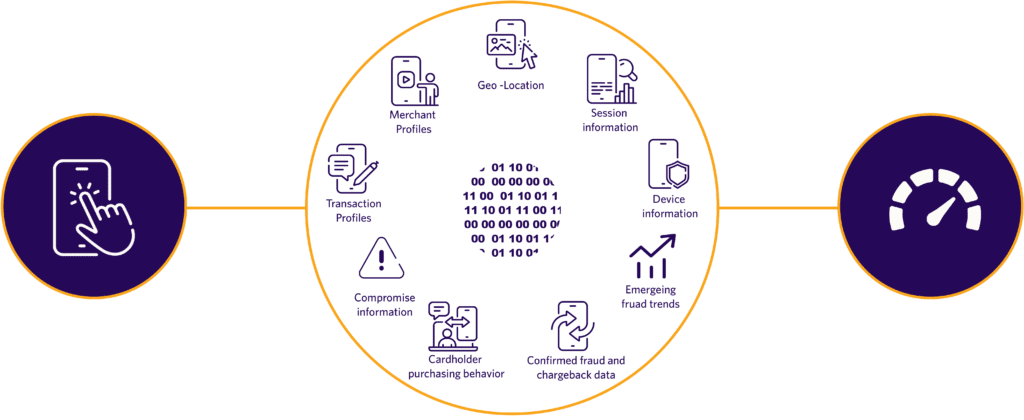
By the time a transaction reaches the issuer, it’s passed through at least three other parties: the payment gateway, the acquirer, and the card network. At each handoff, the signal is compressed, truncated, or converted to a format that loses information. The richest data in the chain sits at the merchant end: device fingerprint, browsing behaviour, session history, IP address, account age, purchase context. Very little of it reaches the issuer intact.
Here’s the plain-language reason why.
Card transactions travel using a messaging standard called ISO 8583, a format built in 1987 for speed, not richness. Think of it as the common language every party in the payments chain speaks, a protocol that prioritises getting the message through fast over getting it through completely.
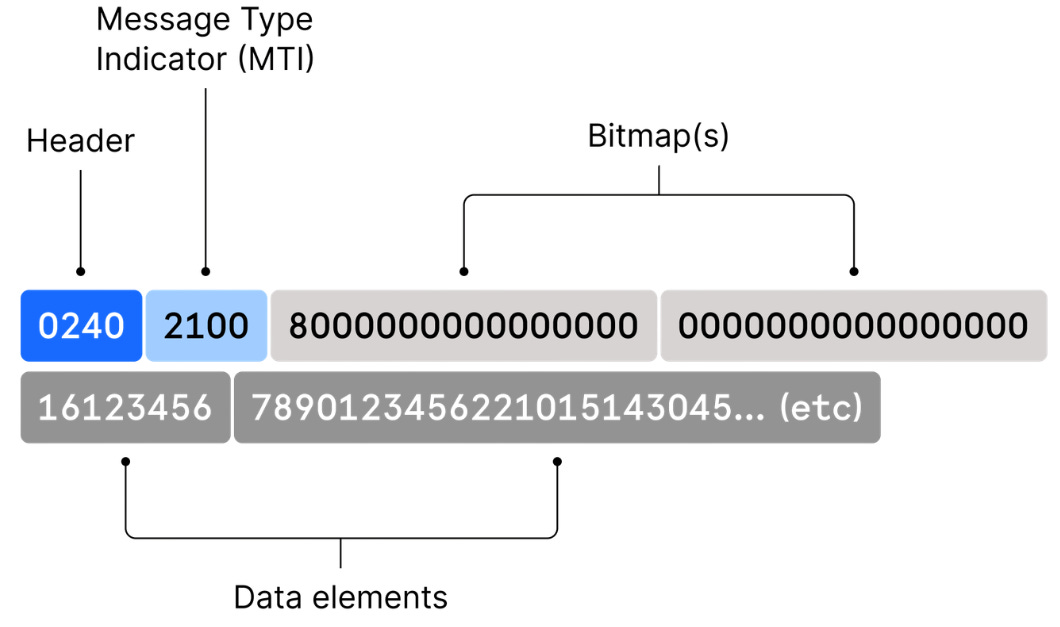
Free-form merchant descriptions get cut short. The merchant category code, a four-digit shorthand that collapses entire business types into a single identifier, tells the issuer almost nothing about what was actually purchased. “Yum Brands” and a $400 catering invoice arrive wearing the same four digits. The issuer has no idea which one they’re looking at.
So the issuer makes the most consequential call in the chain using the least context about what’s actually happening. That asymmetry is structural and has existed since the start of card payments. It shapes every authorization decision made today.
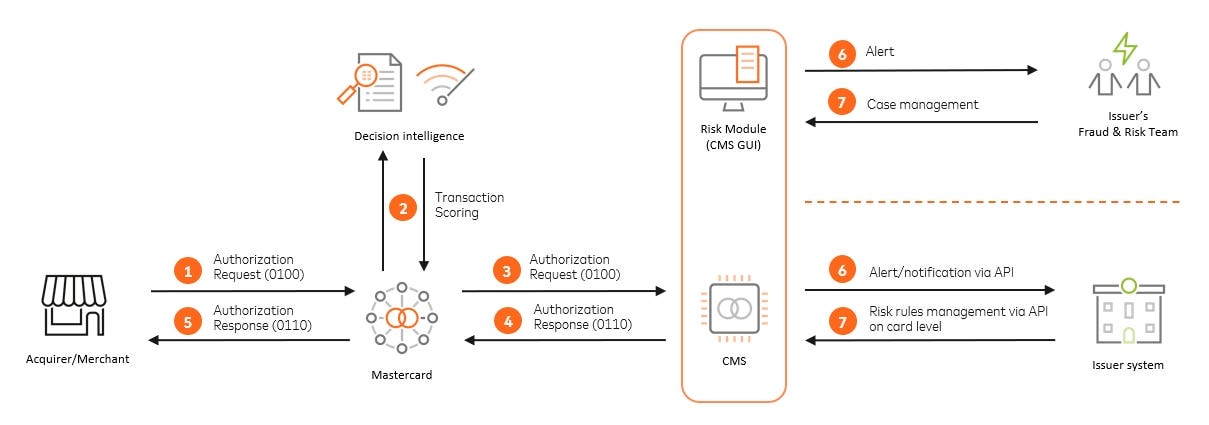
What the issuer does have is its own data: the cardholder’s account history, spending patterns, prior fraud incidents, and the card network's risk score. Visa, for example, analyses more than 400 transaction attributes in under a millisecond before the request even arrives at the issuer’s system. That’s a powerful signal. What happens to it next is where the problem starts.
Inside a typical mid-tier issuer’s authorization system, the request works through several layers.
First come, velocity rules, automated checks along the lines of “has this card been used five times in the last hour,” or “is this amount above a threshold we set three years ago.”
Second, comes a fraud model score that incorporates the network’s signal alongside the bank’s own behavioural data.
Third, sitting on top of all that, a collection of manual overlays: extra rules added during past fraud events, after data breaches, after regulatory reviews, after uncomfortable conversations in risk committees. Rules added for defensible reasons. Rules that are almost never removed.
The result isn’t a decision. It’s a historical accumulation dressed as one.
I’ve seen institutions carrying thousands of active fraud rules with no owner, no review date, and no clear understanding of what each one is actually catching. The rules pile up because adding one is always justifiable and removing one always carries risk. Nobody gets in trouble for being too cautious. So caution compounds.
The outcome sits in one statistic. Close to half of all decline responses across the industry use a single code: “Do Not Honor.” In the United States, that figure is even higher, and some banks send more than 90% of their declines under that label. Three words, no explanation, no feedback, no accountability. The code exists precisely because specificity creates accountability, and accountability is uncomfortable when the decision is wrong.
The Measurement Trap
If you are working or have worked at an issuer, you will recognise this immediately. If you are working on the acquirer side, you might find this genuinely surprising.
The over-decline problem isn’t caused by careless institutions or incompetent teams. It’s caused by rational people responding predictably to the incentives they operate within.
The cost of approving a fraudulent transaction is severe, visible, and directly attributed to the team that made the call. Every dollar of fraud costs a bank more than four dollars once investigation, legal, and recovery are factored in. Each disputed transaction costs issuers somewhere between nine and ten dollars to process. Regulatory penalties for fraud and compliance failures have been rising sharply, and they land on the specific team whose decision triggered them. The consequences of approving fraud are traceable, reportable, and career-affecting.
The cost of declining a legitimate transaction falls entirely on the merchant’s income statement, not the issuer’s balance sheet. There are no regulatory penalties for excessive false decline rates. Visa monitors issuers and will fine those whose fraud-to-legitimate transaction ratio breaches certain thresholds, but the formula explicitly excludes false declines from the calculation. Neither Visa nor Mastercard has a program that penalises issuers for declining too many good transactions. Not one.
What this produces is entirely predictable. Every person inside an issuer risk team who tightens a rule after an incident makes the correct career decision. The aggregate output of those individually correct decisions is a systematic over-declination that harms merchants and cardholders alike, while every internal metric remains green.
That’s what I mean when I say this isn’t a data problem. It’s an organisational design problem that produces a data problem as its symptom.
The proof that it’s solvable is hiding in plain sight. Roughly a third of issuers simultaneously achieve both high authorization rates and low fraud losses. The conventional wisdom that an unavoidable trade-off exists between approvals and fraud control is simply false. Those institutions have already disproved it. The other two-thirds are still optimising against a constraint that doesn’t exist.
The tell is that the decline rate, as a risk team KPI, is still described as a recommendation rather than a standard practice. That gap between what’s advised and what’s actually running is where the problem lives.
False decline rate isn’t on most risk team scorecards. When it lives only on the product or revenue team’s dashboard, it competes with fraud accountability rather than complementing it. The organisational gravity of fraud risk always wins that competition. That’s the design flaw. It’s not subtle, and it’s not hard to name. Most institutions just haven’t chosen to fix it.
The Spiral Nobody’s Measuring
The measurement trap creates a problem inside the institution. But the damage it produces doesn’t stay there. It spreads outward through three mechanisms, largely invisible to the issuers generating them.
The first is the chargeback coding loop. When a cardholder disputes a transaction, whether it’s genuine fraud or simply a purchase they regret and misrepresent, that dispute gets coded in the issuer’s system as fraud. The problem is that friendly fraud, meaning disputes filed on transactions the cardholder actually authorised, is routine. It accounts for the majority of chargebacks in many categories, and in digital goods, it can account for the vast majority of what gets reported as fraud.
Mastercard has acknowledged this directly: when friendly fraud is coded as genuine fraud, it drives model tightening, and model tightening means more legitimate transactions get declined. The model trains on contaminated data. It becomes more conservative. More good cardholders get turned away. Some of them leave. The ratio of genuine fraud to legitimate transactions in the training data worsens. The model tightens again. And so on, quietly, while the fraud rate metric looks fine.
The second mechanism is the attribution gap. When a customer abandons a card because it keeps declining, or when a merchant quietly stops routing to a particular card type because the decline rate has made it commercially unprofitable, that attrition is never coded as a consequence of the authorization decision. The issuer sees no signal.
Research consistently finds that more than a third of cardholders won’t use a card again after a false decline, and a similar proportion won’t return to the merchant where it happened. The customer’s gone, the interchange they’d have generated is gone, and the issuer’s dashboard shows no cause.
The third mechanism is category tightening. When a fraud spike hits a merchant segment, say, a wave of account-takeover fraud at streaming services, the issuer's response is almost always the same: tighten rules across the entire merchant category. The surgical response, which would identify the specific fraud vector and target it precisely, requires data infrastructure and analytical investment that many institutions haven’t built.
The blunt response is fast, defensible, and politically easy. The merchants in that category who had nothing to do with the fraud event absorb a higher decline rate than they have ever experienced.
Together, these three mechanisms explain why the spiral is so hard to stop from the inside. The metrics that get measured all look fine. The damage accumulates in cardholder engagement and merchant relationships, in numbers that nobody’s tracking because nobody built the reporting for them.
The Signal Gap: Having Intelligence and Not Using It
The obvious question at this point is whether the tools to solve this already exist. They do, and they’ve existed for years. The gap isn’t access to intelligence. It’s integration depth.
Both Visa and Mastercard operate sophisticated scoring systems that analyse hundreds of transaction attributes in milliseconds, on the network, before the request even reaches the issuer. Thousands of financial institutions subscribe to these products. Every major issuer has access to this intelligence. The question is what they do with it.
At most institutions, the network score arrives as one input into the same rules engine we described earlier. It sits alongside or below velocity checks and manual overlays added during a fraud event years ago and hasn’t been reviewed since. When a static rule can override the network score, the score’s value is destroyed at the point of integration. The intelligence was purchased. The architecture was fed into it, making sure it couldn’t be fully used.
What deep integration actually produces is significant. A large Latin American issuer, is a great example (can’t name the name unfortunately, but I think you know who I mean) that moved to using network scores as a primary decision input, combined with a proper rules management layer, saw approval rates improve by 700 basis points and false positives drop sharply within eight months. Those numbers come from the network that sold them the product, so apply a reasonable discount. Even at half the performance, the gap between shallow and deep integration is commercially decisive.
The broader architectural point matters more than any single case study. Nearly every financial institution now claims to use machine learning in fraud prevention. That’s technically true and practically misleading.
At one end of the spectrum are institutions where the machine learning model is the primary decision engine, trained continuously on downstream outcomes, including chargebacks and cardholder attrition, with governance that prevents static rules from accumulating on top.
At the other end are institutions where the model produces a score that a risk manager can override, rules from five years ago still run unreviewed, and retraining happens quarterly on fraud labels alone.
Both count as “using machine learning.” Most issuers are closer to the second end than the first.
The Control Shift Issuers Aren’t Discussing
In September 2025, Mastercard launched something that got less attention than it deserved.
They called it On-Demand Decisioning. It lets an issuer define its authorization criteria directly on the Mastercard network, so Mastercard can respond to a transaction on the issuer’s behalf based on rules the issuer has configured, or review and modify the issuer’s own decision before it reaches the merchant. Available globally since October 2025, except in India.
An early adopter, Porto Bank, described the experience plainly: “the solution delivered results with minimal operational risk and, significantly, required no implementation effort.”
Think about what that means for an issuer running a legacy authorization stack built in the early 2000s, layered with overlays through multiple fraud cycles and regulatory reviews, and constrained by a processor agreement that limits how fast internal rules can change. For the first time, the quality of the authorization decision can be separated from the limitations of the internal system. The decisioning logic moves to the network layer. The technical debt stays where it is.
To be honest about what we know at this stage: there’s no published performance data beyond that one endorsement. The product has been live for about five months. The strategic logic is clear. The proof will come.
But the bigger picture isn’t about this single product. Visa’s Risk Manager has allowed issuers to build, test, and publish rules against network scores in near real-time for some time now. Mastercard’s On-Demand Decisioning takes the next step, letting issuers delegate the decision itself to the network.
Together, they represent a real structural shift: authorization intelligence moving from inside issuer walls into the network layer.
Issuers who lean into this gain the agility that their own infrastructure can’t provide.
Issuers who don’t will find the network increasingly making decisions around them, on behalf of merchants and acquirers pushing from the other direction.
That’s not a prediction. It’s what’s already happening.
What Good Actually Looks Like in 2026
The performance gap between institutions that have addressed this and those that haven’t is measurable and significant.
At average institutions, more than 90% of suspiciously flagged transactions turn out to be legitimate customers. The best performers run that same false positive rate in the 60s. A gap of more than 30 percentage points, achieved not through access to better tools but through how the same network signals are integrated, what feedback loops exist, and what the organisation is actually measured on.
The model architecture difference is specific. Best performers treat the network score as a primary signal, not as something a static rule can override. They retrain on downstream outcomes: not just the fraud flag at the transaction moment, but the chargeback result 60 days later, the retry outcome, and the cardholder attrition over the following quarter. The model learns from the full consequences of the decision, not just from the moment it was made.
The organisational difference is equally specific. The false decline rate sits on the risk team’s scorecard alongside the fraud loss rate and chargeback ratio. Authorization rate appears on the agenda at every risk review, not just when a merchant complains loudly enough to get a meeting. The connection between risk, product, and revenue exists in the governance structure, not in occasional ad hoc escalations.
As a reference point for what the recoverable value looks like: Adyen’s acquirer-side authorization optimisation pilots have delivered up to a 6% conversion improvement and up to a 3% reduction in transaction costs for merchants. That’s an acquirer capturing value the issuer is leaving on the table. The value doesn’t disappear just because the issuer isn’t taking it.
Who Owns This Decision in Five Years?
The third of issuers who’ve already cracked this aren’t more sophisticated institutions with better tools. They’re institutions that chose to measure both sides of the equation and built accountability structures that followed from that choice.
The other two-thirds aren’t failing. They’re succeeding at exactly what they’re measured on: fraud losses down, chargebacks controlled, regulatory posture clean. The cost of that success is distributed among merchants and cardholders in ways that don’t appear on any internal dashboard.
As the network layer builds more capability to work around underperforming issuer decision stacks, and as acquirers build their own optimisation tools to recover value that issuers are leaving behind, the issuer still holds the technical authority to approve or decline. But authority exercised through a legacy rules engine, in a landscape increasingly built to work around it, starts to look more nominal than real.
Up Next: Acquirer Optimization
Issuers hold the final decision. Acquirers determine what the issuer ever sees. The routing logic, retry architecture, and signal enrichment that acquirers deploy, or don’t, determine whether a transaction worth approving even reaches the issuer in a form that makes approval possible. In the next issue, I will cover the acquirer stack: what the best are doing differently, where the gap is widest, and where the commercial incentive to stay average is holding the industry back.
Thank you for reading.
P.S. If you are looking for a Payments Strategist/Data Scientist to help you figure out how to start leveraging data as an asset or like to educate your organization or audience through an event or webinar based on 20+ years of experience, don’t hesitate to email or DM me to set up a call and discuss how I can help.
Or if you just want to show your appreciation for my work, feel free to buy me a coffee, as it helps fuel the next editions.
The "fraud losses: down, chargeback ratio: clean" dashboard is exactly what makes this problem so hard to fix internally. Every metric that gets measured looks healthy, so there's no organizational pressure to add auth rate to the agenda. The cost is real but it's invisible to the people running the review.
What I see from the merchant side is that this plays out differently by card brand and issuer concentration. A merchant with a customer base heavy in one regional bank's cardholders can have a materially different approval experience than a competitor serving the same demographic but different issuer mix. That's a competitive disadvantage that never shows up in anyone's fraud report.
Curious whether you're seeing issuers start to track declined transaction revenue loss as a line item, because that's the only thing I can imagine actually moving the needle on agenda setting.
Dwayne, what a fantastic write up. Well done and thanks for sharing.