
Future Proof
Why 2026 Is the Year of Agentic Commerce, Tokenization, Stablecoins, and Modern Infrastructure.

Looking back, 2025 was an amazing year in payments, from deals that closed and revenue processed to innovations that forced the industry to adopt and make the changes necessary to continue delivering value to its merchants and users.
In the past year, four distinct trends matured in parallel.
AI agents moved from demos to production. Tokenization crossed from niche security tool to default infrastructure. Stablecoins graduated from crypto trading to real settlement. Cloud processors replaced decades of legacy batch systems.
Each trend matters individually. Together, they represent the most significant infrastructure transformation since EMV chips replaced magnetic stripes. And unlike that transition, which took nearly two decades, this one’s moving fast.
The data tells the story.
Visa provisioned 12.6 billion network tokens. Stablecoins processed $26 trillion in on-chain volume. Mastercard committed to 100% European e-commerce tokenization by 2030. Major payment networks launched AI agent programs with OpenAI, Google, and Microsoft.
These aren’t pilot programs anymore. They’re production systems processing real money.
Let me break down what actually happened in 2025, why this will shape 2026, and what it means for your payment strategy.
AI Agents Went From Prompt to Purchase
Agentic commerce refers to digital shopping where AI agents act autonomously. They discover products, compare options, and complete purchases with minimal human input.
What sounded futuristic 18 months ago became reality in 2025.
The flurry started in October. OpenAI partnered with Stripe to introduce an Agentic Commerce Protocol. ChatGPT users can find items and complete checkout within the chat interface. Initial testing with Etsy proved the concept worked.
Google went bigger. They announced Agent Payments Protocol, developed with 60+ partners including Adyen, Mastercard, PayPal, and Coinbase. The protocol establishes common rails so when your smart fridge orders groceries or your digital assistant books travel, the payment flows smoothly and safely.
PayPal launched agentic commerce services the same month. Their Store Sync tool makes merchant product catalogs accessible to shopping agents. An “agent-ready” checkout integration rolled out in early 2026, enabling PayPal’s 35 million merchants to accept payments from AI-driven conversations, with fraud protection and dispute handling built in.
Visa and Mastercard followed with frameworks to secure AI-to-merchant payments.
Visa introduced Trusted Agent Protocol after observing a 4,700% surge in AI-driven traffic to online merchants. TAP uses cryptographic signatures and metadata to enable an AI shopping bot to identify itself as trustworthy.
Mastercard unveiled Agent Pay, which focuses on identity and tokenization. AI agents must be credentialed by Mastercard and receive an “agentic token” to initiate transactions on the Mastercard network. The agentic tokens function like regular card payments at checkout, but merchants can verify that the request originated from a Mastercard-approved bot.
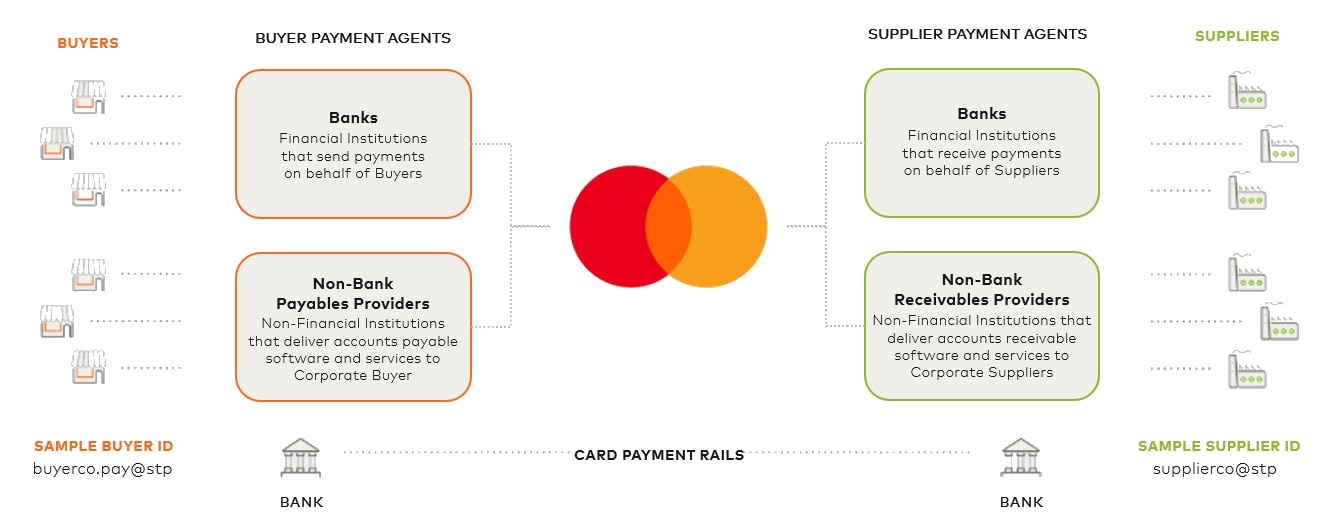
Both schemes preserve key consumer protections. The transaction links to the user’s account for receipts, loyalty, and chargebacks. Shopping via AI feels as trusted as any other channel.
Consumer behavior shows readiness.
81% of U.S. consumers expect to use AI agents for shopping by 2030. Early adopters report high satisfaction, with 85% reporting that AI has improved their experience. Analysts project agentic commerce could influence around $1 trillion in annual online spending within a few years. That’s roughly half of all e-commerce.
Deloitte predicts that autonomous agents could drive up to $17.5 trillion in global commerce by 2030. This potential explains why payments incumbents got involved early. They foresee AI-driven shopping as a pivotal force.
Still, significant work remains.
The rise of autonomous purchasing breaks the old assumption that a human always clicks “Buy.” Protocols like AP2, open-sourced in 2025, answer questions of how an agent proves user authorization, how merchants verify an agent’s instructions reflect true intent, and who’s liable when something goes wrong.
AP2 uses cryptographically signed mandates as evidence of user consent. The industry established a new trust layer for AI commerce. By the time agent-driven purchases scale up, the infrastructure will be ready to support them securely.
2025 turned agentic commerce from theory into practice. As we head into 2026, large payment networks built the rails for agent payments. Big merchants and tech firms experimented with AI-driven sales channels. Consumers became comfortable using AI assistants to shop.
The stage is set for rapid maturation. Companies that adapt their payments strategy to accommodate AI agents will benefit. Those who don’t may find themselves invisible when digital agents decide where and how to buy.
Tokenization Became Default Mode
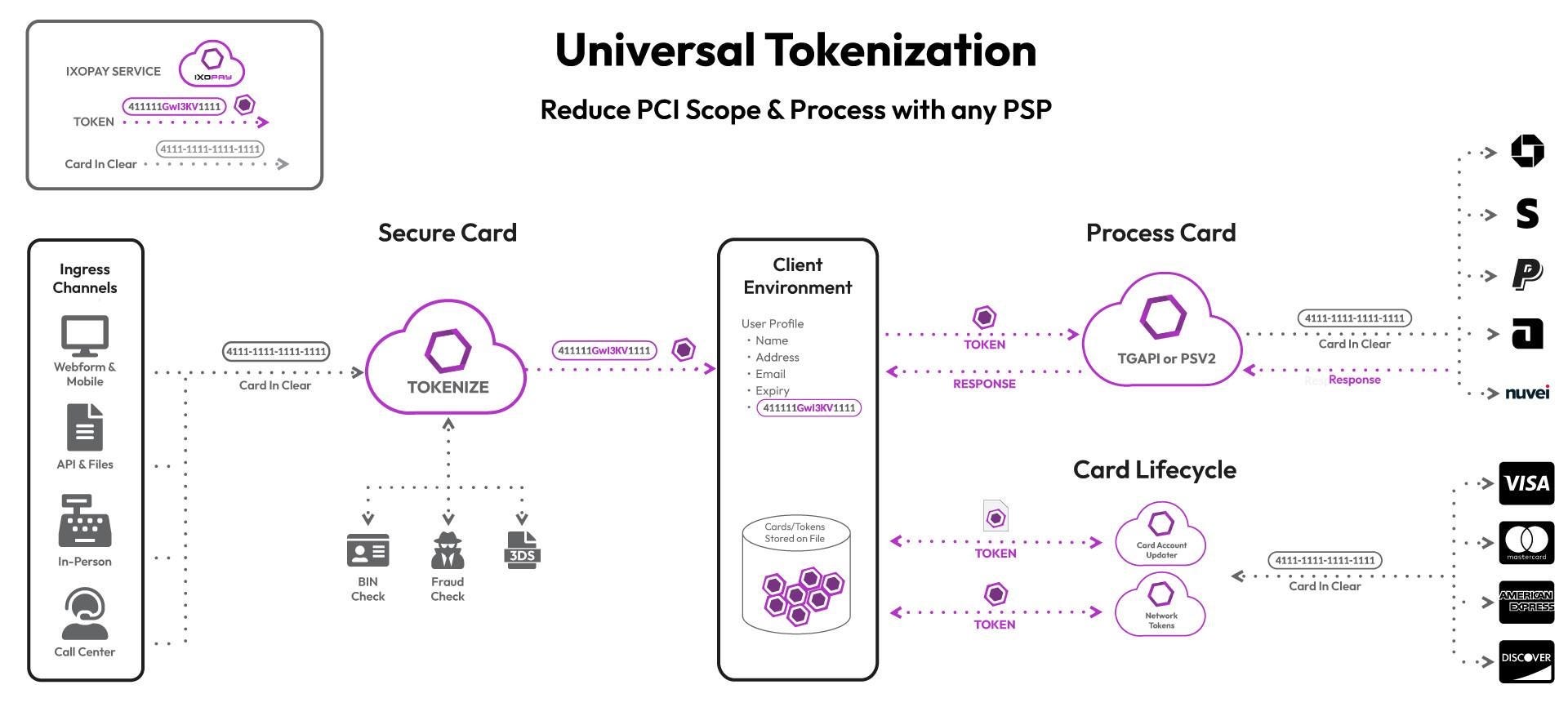
Tokenization means replacing sensitive card data with a random token or surrogate value that’s useless to fraudsters. Initially adopted for mobile wallets and PCI compliance, tokenization has since become a cornerstone of digital payments.
By late 2024, roughly one-third of all global card transactions were processed via tokenization. Visa’s network alone issued over 12.6 billion payment tokens by early 2025. About 50% of Visa's digital transactions now use tokenization, up 44% year over year.
The reason is simple. It works.
Visa data show that transactions processed with network tokens have a 30-40% lower fraud rate than those processed with raw card numbers. Merchants see this directly. Visa noted 40% less fraud in tokenized e-commerce transactions than in non-tokenized transactions.
Authorization approval rates improve, too.
Mastercard reports tokenization can raise auth rates by 3 to 6 percentage points, as updated tokens reduce declines from expired or changed cards. Visa observed a 4.6% global lift in approval rates thanks to tokens. Even Amex cited roughly 2.7% improvements.
These are huge gains in an industry that fights for basis-point improvements. A 5% lift in approvals can translate to millions in recovered revenue. A subscription merchant with $50 million in annual billings could recoup an additional $2.5 million by reducing 5% fewer payment failures. A merchant doing $100M annually with a 0.5% fraud rate might save $ 150k–$200k in fraud losses by transacting on tokens.
Beyond direct losses, tokens prevent the indirect costs of data breaches. Stored tokens can’t be exploited, reducing liability and PCI compliance scope by up to 90% for businesses that no longer handle raw card data.
Given these benefits, tokenization became the default for many digital payment flows in 2025.
The card networks themselves drove this hard. Mastercard set a goal to “eliminate manual card entry by 2030” in favor of tokenized credentials. Part of what they call the rise of a “token economy.” Visa aggressively scaled its Visa Token Service, crossing 12.6 billion tokens issued and 50% of digital transactions tokenized.
Both giants pushed tokenization into new regions. Regulations in India drove near-100% tokenization of domestic e-commerce by late 2024, following an RBI mandate that forced merchants to purge stored card PANs. The result was a swift drop in fraud with minimal disruption. Markets such as Europe and LATAM saw rising token usage as issuers and merchants sought fraud and approval gains.
Apple made a notable shift in 2025 by opening up its Secure Element to third-party payment apps with iOS 18.1. They introduced support for Merchant Payment Account Numbers, essentially Apple’s implementation of merchant-specific tokens for recurring charges. A streaming service could maintain a token that can be billed repeatedly, rather than storing your actual card number.
PayPal expanded its tokenization strategy in 2024 with the “PayPal Everywhere” campaign, highlighting 850+ million cards tokenized on its platform via Braintree. By replacing card-on-file data with tokens, PayPal lets consumers pay in physical retail directly from tokenized credentials on file, securely unifying online and offline use.
Traditional banks launched Paze, a bank-backed digital wallet that went live in 2024, with 150 million pre-tokenized cards from issuers such as Chase, BofA, and Citi. Paze allows consumers to check out on e-commerce sites by entering their email and bank password, tapping into a vault of tokenized cards. No manual card entry required.
Tokenization moved from a behind-the-scenes risk tool to a fundamental layer of modern payments. It’s increasingly the norm for any digital or card-not-present transaction. Even in card-present, the rise of contactless and mobile wallets means a large share of in-person taps are tokenized.
The industry’s vision for the next few years is “universal tokenization,” where physical card numbers are rarely seen or transmitted. By 2030, manually typing a card number into a website may feel as archaic as writing a paper check.
India offers real-world proof at scale. Following the RBI mandate, the market moved to near-100 % e-commerce tokenization within 18 months. Fraud rates dropped. Authorization rates climbed. Merchants who complained about implementation costs saw ROI within quarters.
Given the momentum, 2026 will likely see tokenization become standard practice across even more channels, further reducing payment fraud and friction. The death of the exposed 16-digit card number is underway. That’s good news for everyone except fraudsters.
Importantly, tokenization is a prerequisite for agentic commerce at scale. You can’t hand an AI agent your credit card number and tell it to go shopping. The security model collapses immediately. Tokenization with mandate controls addresses this by allowing an agent to use a constrained payment token instead of raw credentials. This illustrates how these 2026 trends dovetail.
Stablecoins Crossed Into Mainstream Settlement
Stablecoins are digital tokens pegged to fiat currencies such as the U.S. dollar. They’ve been around for years in the crypto world, primarily used for trading. But 2025 was the year stablecoins decisively entered the mainstream payments conversation.
These crypto-dollar tokens promise the speed and programmability of cryptocurrency without the volatility, making them appealing for payments use cases such as remittances, merchant settlements, and cross-border transfers.
By the numbers, growth has been astounding. Over the past five years, the total circulating supply of stablecoins grew roughly 9x, reaching over $300 billion in 2025. Transaction volumes on public blockchains are even more eye-popping. In 2024, stablecoins facilitated more than $26 trillion in on-chain transaction volume.
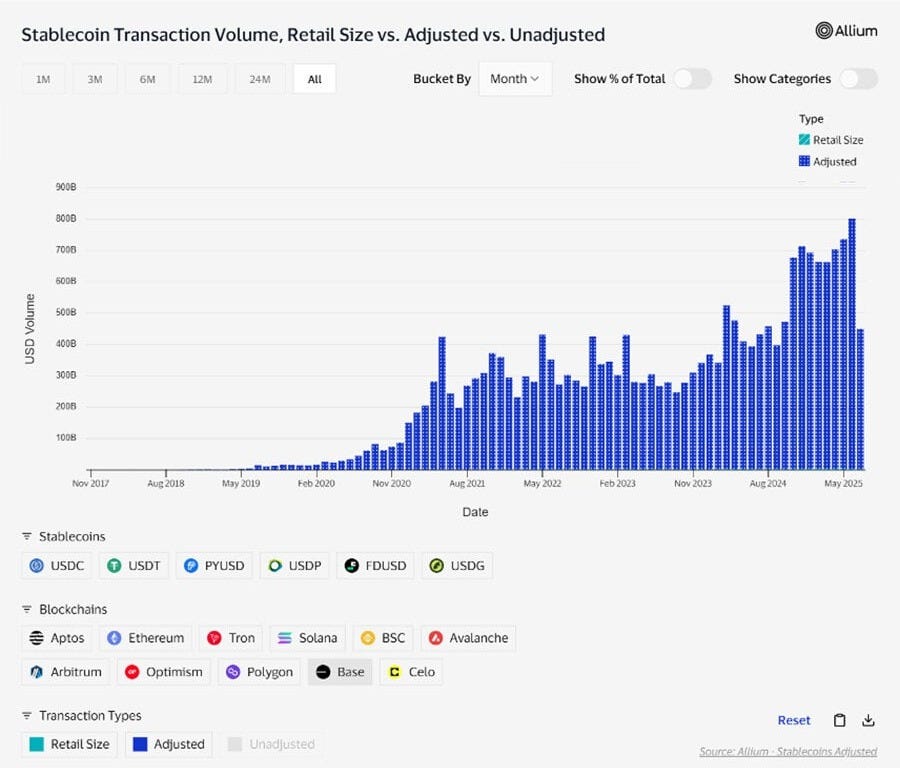
That annual volume is already in the ballpark of Visa’s total network volume. Visa’s payment volume was around $14T in 2022. Of course, the vast majority of that $26T has so far been pseudo-financial flows like crypto trading and DeFi lending rather than retail purchases. Estimates indicate that only about 1% of stablecoin volume today is linked to “real-world” payment transactions.
But the key point is this. The infrastructure now exists to move tens of trillions of value in tokenized form. Mainstream institutions are exploring how to harness that infrastructure for everyday payments.
In 2025, the payments industry responded to the rise of stablecoins in a significant way.
Visa made perhaps the most significant move. After running pilot programs since 2021, Visa announced in December 2025 the launch of USDC stablecoin settlement for partners in the U.S. This means issuers and acquirers can settle their daily card transaction obligations with Visa by paying in USDC on a blockchain rather than via legacy bank wires.
The initial rollout uses the Solana blockchain, chosen for speed and low cost. It includes fintech-friendly banks like Cross River Bank and Lead Bank as early adopters. Settlement normally takes one to two days, excluding weekends and holidays. It is now close to instant and available 24/7, with funds moving on-chain in minutes.
By late 2025, Visa reported that its stablecoin settlement pilot had already reached a $3.5 billion annualized run rate. Visa framed this as modernizing its core infrastructure for the Internet age, calling it “a major milestone” in melding blockchain with traditional payments to improve treasury efficiency.
Mastercard has been active as well. In September 2025, Mastercard announced a partnership with blockchain fintechs to pilot stablecoin payments and compliance solutions. In November, Mastercard joined forces with Ripple, WebBank, and crypto exchange Gemini to test settling credit card transactions in a USD stablecoin over a public blockchain.
Unveiled at Ripple’s Swell conference, this pilot was one of the first instances of a regulated U.S. bank settling fiat card payments via stablecoin in real time. The idea is to reduce the multi-day clearing process to seconds, lowering costs and freeing up capital. The token used, RLUSD, has over $1B in issuance and is regulated under New York’s trust charter.
These moves by Visa and Mastercard send a clear signal. Stablecoins have matured enough that major networks trust them for core payment operations, at least in controlled pilots. By integrating stablecoins into their settlement layers, the card networks hedge against the limitations of traditional banking hours and slow ACH rails.
Beyond the networks, many fintech companies and neo-banks jumped on the stablecoin bandwagon in 2025. PayPal launched its own U.S. dollar stablecoin, PYUSD, in August 2023. In 2025, PayPal worked to integrate PYUSD into its consumer and merchant ecosystem, enabling it as a funding currency in the PayPal wallet.
Block’s Cash App announced it would allow users to send and receive stablecoins such as USDC. Klarna, a major BNPL provider, hinted at its own stablecoin, “KlarnaUSD.” And Stripe acquired Bridge for over $1 billion to bolster its stablecoin and blockchain payment orchestration.
Some of the strongest real-world adoption is happening in emerging markets and for cross-border flows. Boston Consulting Group’s 2025 payments report found that Turkey recorded $38 billion in stablecoin transaction volume through March 2024. That’s 4.3% of Turkey’s GDP. This reflects how citizens in countries with currency instability or capital controls turn to USD-pegged stablecoins as an alternative store of value and transfer medium.
Nigeria is another case. USDC volume there jumped 412% year-on-year, reaching over $3 billion per month in 2025. Nigerians use stablecoins to hedge against Naira inflation and to facilitate commerce where access to USD is limited.
On the corporate side, B2B cross-border payments via stablecoins exploded. BCG noted stablecoin-based B2B payments grew 30-fold from early 2023 to 2025, from under $100 million to over $3 billion. Companies are lured by near-instant settlement across time zones and much lower fees than wire transfers or correspondent banking.
These developments underscore that stablecoins are crossing the chasm from crypto niche to payments mainstream. Importantly, stablecoins are now viewed not as a replacement for card networks or banks, but as complementary infrastructure to accelerate and improve existing payment processes.
When Visa speaks of “modernizing its settlement layer” with stablecoins, or when Mastercard partners with a crypto firm to streamline payments compliance, it signals that stablecoins are being integrated into the established financial system rather than operating in a separate realm.
That said, actual consumer and merchant adoption of stablecoins for day-to-day payments remains in its early stages. Outside of crypto trading, you won’t find many people buying groceries or paying bills in stablecoin yet. The user experience and merchant acceptance need improvement, and regulatory clarity is still developing, especially in the U.S.
But progress is happening quickly. Governments are crafting rules. The EU’s MiCA regulation, effective in 2024, establishes a comprehensive framework for stablecoin issuers. Companies are abstracting away blockchain complexity. You might use a Visa card that actually settles via USDC in the background, with no knowledge of blockchain needed.
Visa’s lead crypto executive noted in 2025 that some banks are “not only asking about it, but they’re also preparing to use it” to improve treasury operations. Stablecoins enable 24/7, always-on money movement, something traditional rails can’t do. That alone is a powerful advantage in an increasingly global, real-time economy.
Looking toward 2026, stablecoins appear poised for greater integration into payment networks and fintech offerings. We may see more pilots. Perhaps additional large banks settling with Visa via USDC, or merchants starting to accept stablecoins through Stripe or Shopify plugins. If macroeconomic conditions in certain countries worsen, stablecoin usage as an alternative could spike further.
Importantly, stablecoins could serve as the currency of choice for machine-driven commerce. AI agents might use stablecoins for instant, programmable transactions in agentic commerce scenarios. The coming year will test how far the industry can go in bridging the gap between the speculative promise of stablecoins and practical, at-scale payment applications.
Cloud Infrastructure Made It All Possible
Underpinning all these trends is the necessity for a modern, flexible payment infrastructure. The payments plumbing has historically been dominated by a few large players running on legacy technology. Mainframes, COBOL, batch processing. In recent years, a new breed of cloud-native payment processors emerged, promising greater agility, scalability, and speed of innovation.
In 2025, this shift in infrastructure reached an inflection point. We witnessed the unwinding of major legacy payment processing conglomerates and the continued rise of fintech-focused processors.
A few years ago, incumbents attempted to future-proof by scale. FIS bought Worldpay in 2019 for $43B. Fiserv bought First Data for $22B. Global Payments merged with TSYS for $22B. These deals were intended to create end-to-end giants spanning issuance and acquisition.
Fast-forward to 2025, and those bets largely fell flat. In a dramatic reversal, Global Payments agreed to sell its entire Issuer Solutions business to FIS for $13.5B, while simultaneously acquiring Worldpay from FIS for $22.7B. The 2019 mega-mergers were partly undone. FIS and Global basically swapped assets back, with massive write-downs.
This “strategic unwinding” underscored that the combined entities weren’t delivering value greater than the sum of their parts. The challenges were both operational, integration pains and tech debt, and market-driven. Customers shifted to newer platforms. As one analyst put it, “the market moved underneath them.”
The breakup of these legacy processors is telling. Scale alone wasn’t enough. Modernization is what’s needed. Fiserv also faced investor pressure in 2025 amid concerns that years of underinvestment in technology had caught up with it. Collectively, the incumbents saw their stock underperform and had to reset growth expectations.
This creates a vacuum that newer tech providers are rushing to fill.
Over the last decade, a cohort of fintech-friendly processors emerged. Galileo and i2c built issuer processing on modern technology, replacing batch files and mainframes with APIs and distributed cloud systems. SoFi’s acquisition of Galileo in 2020 and Galileo’s growth to powering 168 million accounts by 2023 demonstrated the scalability of these platforms.
The “third generation” of processors launched in the 2010s went even further. Marqeta invented modern card issuing APIs, offering instant card provisioning, just-in-time funding, and developer-friendly tools. Marqeta now processes over $84 billion per quarter with 99.99% uptime.
Lithic built an issuing stack from scratch after experiencing the pain of legacy APIs. By directly connecting to Visa and Mastercard and focusing on clean developer experience, Lithic quickly attracted customers and achieved 99.99% system uptime. It’s known for its sandbox and documentation, a stark contrast to the “black box” legacy processors.
Newer entrants aren’t just replicating old capabilities. They’re expanding what’s possible. In January 2025, Highnote became the first to offer unified issuing and acquiring on a single cloud platform via a single API. This means a fintech could handle card issuing and merchant processing in an integrated way, using GraphQL APIs, rather than patching together multiple vendors.
The speed advantage of modern infrastructure is well-established. Launching a new card program or integrating a new feature can take weeks rather than months. Industry consultants note that legacy issuers who require 6-12 months for implementations now face competitors who can launch in 3-6 weeks on modern platforms. This agility in product development and onboarding is crucial as companies want to iterate quickly.
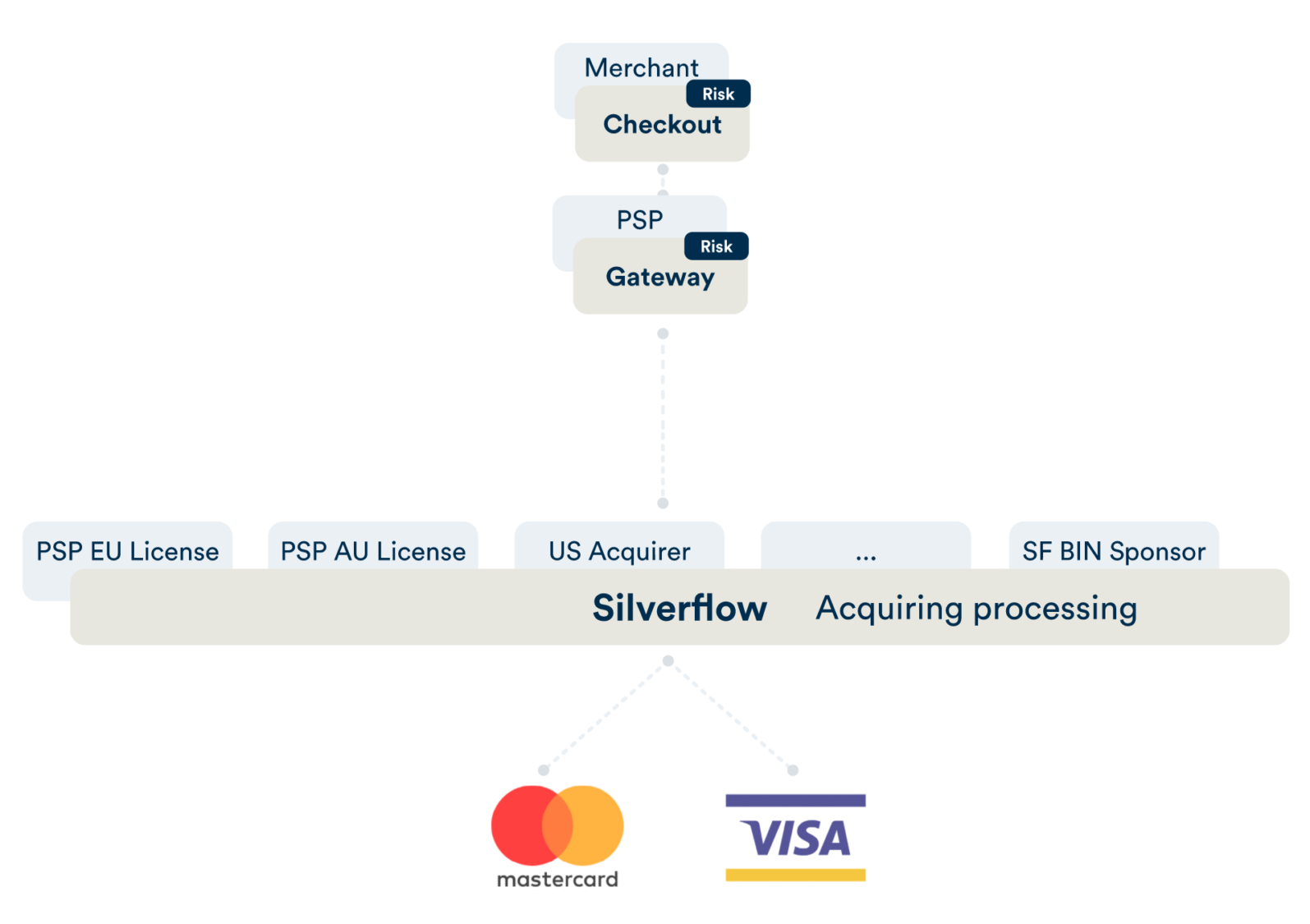
In 2025, major financial institutions opted for cloud-native solutions. Deutsche Bank partnered with Silverflow to launch a cloud-native acquiring platform across Europe. Silverflow’s API-first system enabled Deutsche Bank to reduce integration time and onboard merchants faster than with its previous setup. They maintained stellar authorization rates above industry benchmarks and automated chargeback workflows, greatly reducing ops overhead.
Paymentology, a global cloud issuer-processor present in 50+ countries, continued to win deals with incumbent banks and fintechs in 2025, emphasizing its cloud scalability and real-time capabilities. Paymentology’s Chief Product Officer noted that “legacy systems can no longer meet modern demands,” as clients now expect always-on service, rich data insights, and quick adaptability.
Institutions are increasingly replacing or supplementing their core payment processors to remain competitive. Even large processors have announced initiatives to modernize their technology stacks, whether through in-house overhauls or fintech startup acquisitions, to avoid being left behind.
Meanwhile, integrated platforms like Adyen showcased the rewards of investing in one’s own modern infrastructure. Adyen built its processing stack from scratch for both acquiring and issuing and operates it on a single global platform. In the 12 months through late 2025, Adyen processed roughly $1.5 trillion in payment volume, with continued double-digit growth. Adyen’s success, achieved without major acquisitions, underscores that a cloud-native, unified architecture can reliably handle immense scale.
We’re likely to see further migration to modern payment processors by banks, fintechs, and merchants in 2026. The advantages are becoming too large to ignore. Faster time to market, higher uptime, and easier integration of new features like tokenization or multi-currency. If a legacy issuer platform experiences downtime or cannot properly support Apple Pay tokens, a digital bank might switch to a provider such as Marqeta or Thredd.
Supporting emerging trends requires modern plumbing. Stablecoins and CBDCs may require processors capable of handling both blockchain and card networks. Agentic commerce protocols such as Visa’s TAP and Google’s AP2 will require payment gateways and processors to adopt new API standards and comply with cryptographic mandates. Tasks are much easier on cloud-based systems that can update rapidly.
Real-time payments are also growing. Global instant payment volumes rose roughly 40% in 2024. Many modern processors are already built to interface with those via open APIs, whereas older ones often focus only on cards.
As we enter 2026, the modernization of payment infrastructure is reaching critical mass. We’re seeing concrete effects. Faster implementations, improved reliability, consolidation of some legacy units. This trend will underpin the success of other innovations. Whether it’s handling billions of new tokenized transactions, settling in stablecoins on a weekend, or processing an AI-driven purchase instantly, cloud-native systems are far better equipped than decades-old processors.
So What Will This Mean for You
The groundwork laid over the past year provides clear direction. The future of payments will always be on, smart, and built on modern rails. 2026 is poised to take us further down that path, turning much of the promise we’ve discussed into everyday reality.
But here’s the thing. None of this matters if you’re still running your payment strategy like it’s 2019.
Think about where your company sits right now.
Are you still treating tokenization as a security checkbox?
Are stablecoins something “the crypto team” handles?
Is agentic commerce a futuristic demo you saw at a conference?
If yes to any of those, you’re not alone.
Most payment organizations are structured for the world as it exists, not the one arriving. Your fraud team, your processor integrations, your product roadmap. All optimized for a model where humans click checkout buttons and cards flow through batch settlement windows.
That model still works today. It won’t in 18 months.
Here’s a thought exercise for you. Pull out your 2025 strategic plan. The one you presented to the board last December. Look at the three big initiatives you committed to. Now ask yourself honestly:
How many of those initiatives prepare your company for a world where AI agents control 30% of transaction volume?
Where tokenization is mandatory?
Where settlement happens in seconds via stablecoins, and where your processing infrastructure needs to handle all of it in real-time?
If the answer is none, you’ve got work to do. If the answer is one, you’re ahead of most but still behind the curve. If the answer is two or more, you’re in the right conversation.
The companies winning in 2026 won’t be the ones with the biggest R&D budgets or the flashiest innovation labs.
They’ll be the ones who made hard decisions in late 2025 and early 2026.
They picked which protocols to integrate.
They upgraded their processor relationships.
They ran small experiments with agent-ready checkouts.
They tokenized their card-on-file vault.
They tested stablecoin settlement in one market.
None of those things are individually transformative. Together, they position you to capture value when the market shifts. And the market is shifting faster than most executives realize.
India moved to near-universal tokenization in 18 months once regulations required it. Pix in Brazil reached 160 million users in four years. Apple Pay went from launch to processing $686 billion in annual payments in less than a decade. These aren’t slow-burning technology cycles. They’re rapid adoption curves enabled by regulatory mandates, network effects, and clear consumer value propositions.
The same forces are aligning behind agentic commerce, tokenization, stablecoins, and cloud infrastructure. Regulations are coming. Networks are building the rails. Consumers are ready. The infrastructure exists.
Your competitors are making moves right now. Some will experiment and fail. That’s fine. Experimentation is how you learn. Some will experiment and succeed. Those are the ones that’ll capture disproportionate market share when these trends mature.
The question isn’t whether to engage with these innovations. It’s how quickly you can move and how intelligently you can prioritize.
So here’s my challenge to you as we close out 2025.
Block two hours in the first week of January. Get your payment strategy team in a room. No laptops, no decks, just a whiteboard. Write these four words at the top: Agents, Tokens, Stablecoins, and Modern Infrastructure.
Then work through these questions for each one.
Where are we today?
What’s one experiment we could run in Q1 2026?
What would success look like?
What’s blocking us?
By the end of those two hours, you should have four experiments scoped and one priority decision made.
Maybe it’s upgrading your processor to one that supports network tokenization natively.
Maybe it’s integrating Visa’s Intelligent Commerce API.
Maybe it’s running a pilot settlement via USDC in one low-risk market.
Maybe it’s just mapping your current architecture to understand where the bottlenecks are when transaction volumes double and latency requirements cut in half.
The specific experiment matters less than the commitment to experimentation itself. Because the companies that thrive in 2026 won’t be the ones with perfect strategies. They’ll be the ones who learned faster than their competitors because they started testing earlier.
The infrastructure is here. The protocols are live. The data proves the benefits. The only question left is whether you’re building for the world that’s arriving or defending the world that’s ending.
2026 isn’t just another year. It’s when four years of parallel innovation finally collide. Be ready for it.
Thank You for Reading. Please like, Comment, Share, or Post on Your Social media. I appreciate all the feedback I can get.
P.S. If you are looking for a Payments Strategist to help you with figuring out what to focus on, or organizing an event, webinar where you need someone to educate and or challenge your audience on what’s happening in payments, please don’t hesitate to email or DM me, to set up a call.
Or if you appreciate my work, feel free to buy me a coffee!